

Ireland's Citizenship Bill 2026: What Changes and When
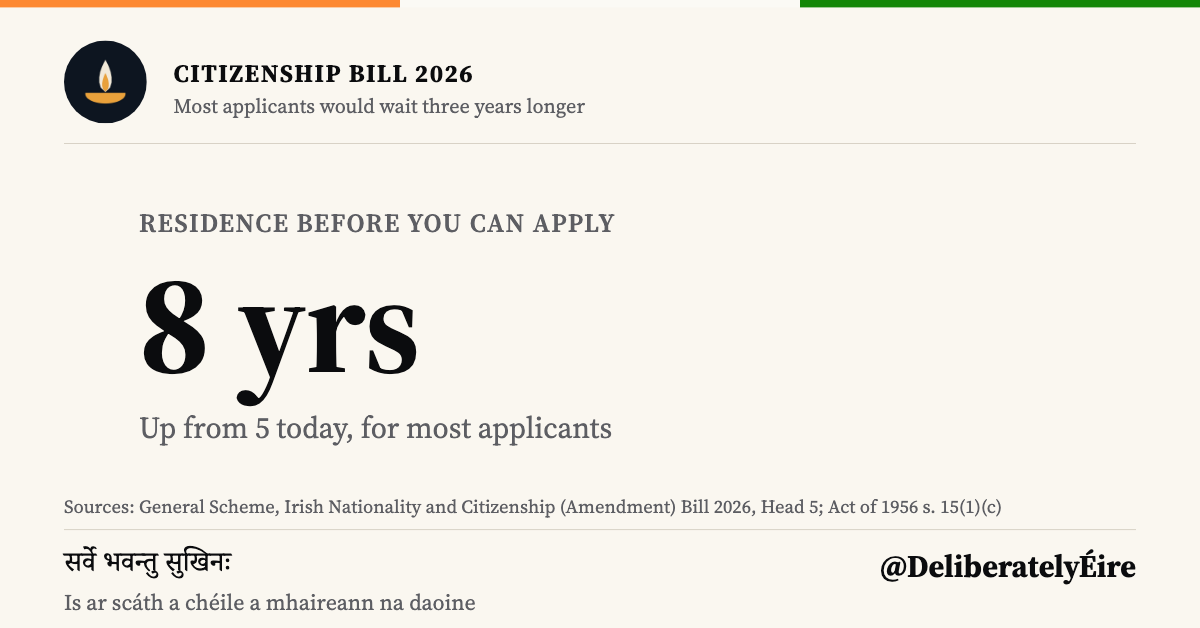
A plain-language guide to the General Scheme published by the Department of Justice, Home Affairs and Migration
Five Years to Eight: What Ireland Is Proposing
The Irish government has published the General Scheme of the Irish Nationality and Citizenship (Amendment) Bill 2026 — a legislative blueprint that, if enacted, would represent the most significant tightening of naturalisation requirements in decades.
The stated aim: ensure that citizenship reflects "steady economic and social integration" and a "meaningful long-term connection" to Ireland. The practical effect: longer waits, higher bars, and new tests for anyone seeking to become Irish.
In September 2026 the Government approved priority drafting of the Bill, and the General Scheme goes to the Joint Committee on Justice for pre-legislative scrutiny. For how today's five years compares with Germany, France, the UK and Austria, see Is Five Years Truly Five Years?
What It Means for One Arrival
Take someone who lands in Dublin in January 2026. The permission in her passport, not her circumstances, decides when she can first post a naturalisation application.
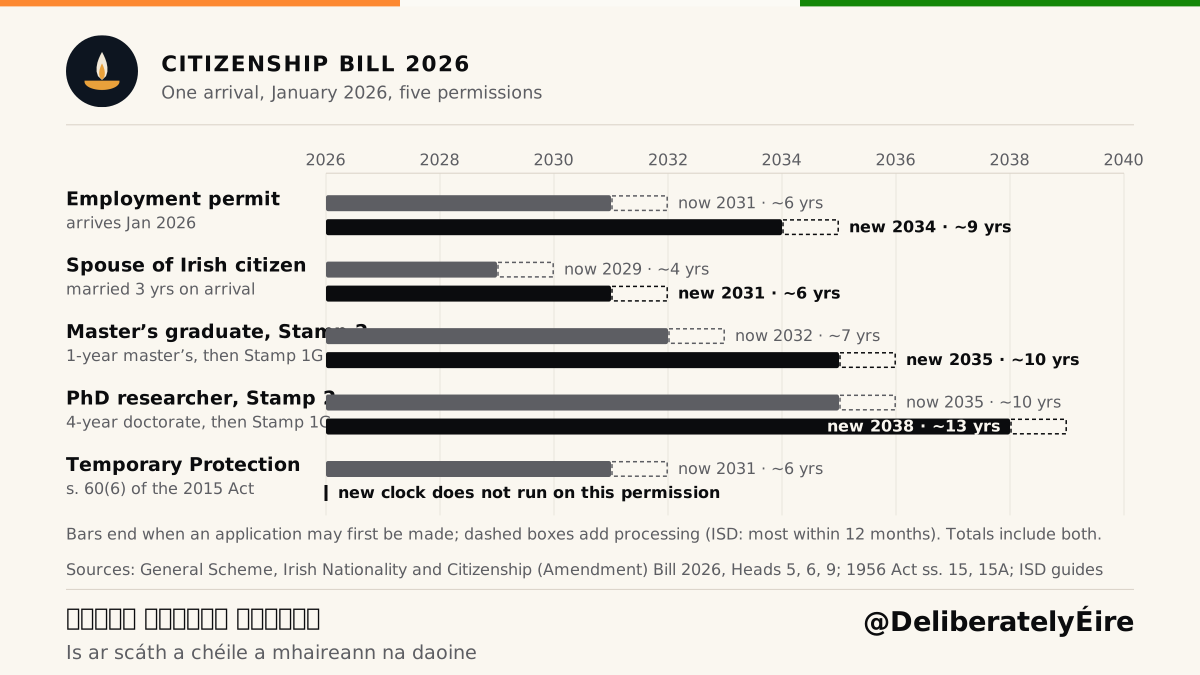
The bars run to the first date an application may be made. A grant is at the Minister's discretion. The dashed boxes add processing on top: Immigration Service Delivery says most but not all applications are processed within 12 months. The total beside each bar counts from arrival to a likely decision, so a PhD researcher who lands in 2026 is looking at about thirteen years under the Scheme.
- On an employment permit, she reaches five years of reckonable residence in 2031. Under the Scheme she needs eight, so she waits until 2034.
- Married to an Irish citizen for three years already, she can apply in 2029 today; the Scheme's five-year residence rule pushes her to 2031.
- On Stamp 2 for a one-year taught master's, that year does not count. Her clock starts with Stamp 1G in 2027, so 2032 becomes 2035.
- On Stamp 2 for a four-year doctorate, none of that time counts. Her clock starts with Stamp 1G in 2030, so 2035 becomes 2038 — twelve years after she arrived.
- On Temporary Protection, she could count that time today and apply in 2031. Head 9 excludes it outright, so the clock does not run at all while she holds that permission.
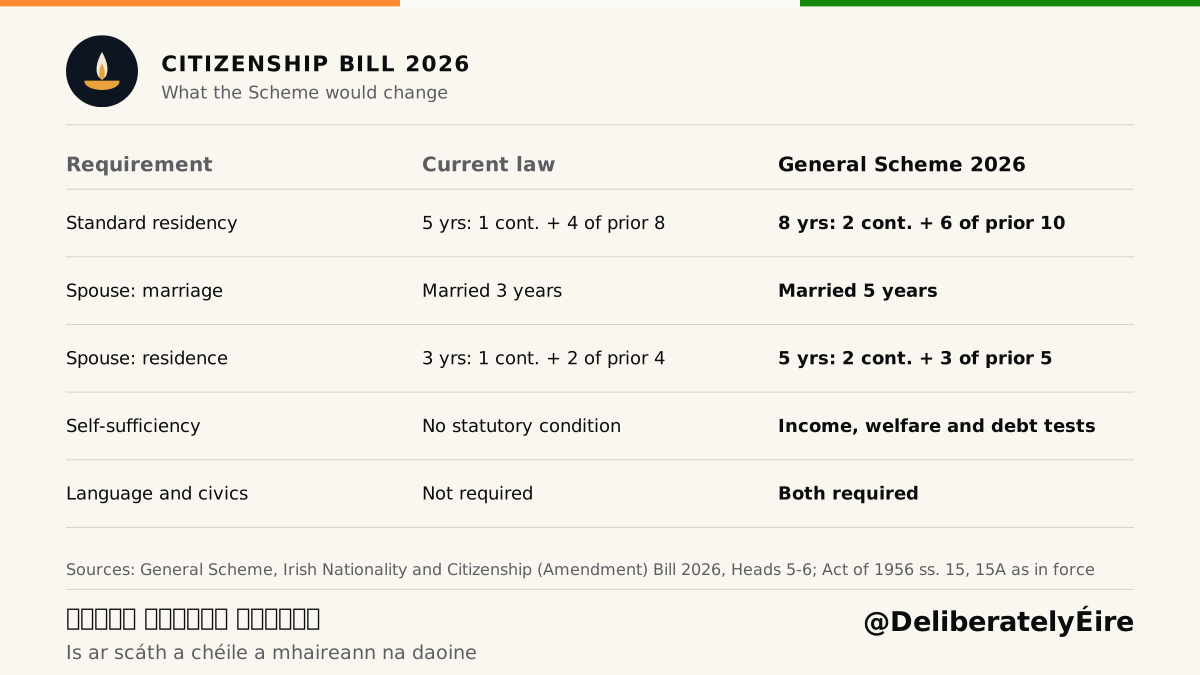
At a Glance: Old vs New
| Requirement | Current Law | Proposed (Bill 2026) |
|---|---|---|
| Standard residency | 5 years: 1 continuous + 4 in the previous 8 | 8 years: 2 continuous + 6 in the previous 10 |
| Spouse of Irish citizen: marriage | Married or in a civil partnership 3 years | 5 years |
| Spouse of Irish citizen: residence | 3 years: 1 continuous + 2 in the previous 4 | 5 years: 2 continuous + 3 in the previous 5 |
| Self-sufficiency | Not an explicit statutory condition | New for standard applicants (Section 15): minimum income; no prescribed welfare or housing support for 2 years; no state debts. Head 6 does not add it for spouses |
| Family members | No separate test | The welfare and housing lists weigh the "applicant and his or her family members" (Section 15F(5)(b)) |
| Language proficiency | Not required | New for all applicants: Irish, English or Irish Sign Language, standard set by the Minister |
| Civics knowledge | Not required | New for all applicants: Irish society, government and Constitution, standard set by the Minister |
| Good character | Required | Required, and explicitly non-waivable |
| Listed offences | No statutory list | Schedule 1 offences bar a grant outright |
| Reckonable residence | Temporary Protection and pending EU treaty rights time counts; Stamp 2 does not | Temporary Protection, refused EU treaty rights claims and fraud excluded (Head 9). Stamp 2 unchanged: still does not count |
| Children born in Ireland (Section 6A, via 6B) | Parent's residence reckoned per current Section 16A | Per the new, stricter Section 16A, for children born after commencement (Head 4) |
| Refugees and subsidiary protection | Standard or spouse route | Unchanged. Only Temporary Protection is in the Head 9 exclusion list (2015 Act s. 60(6); 2026 Act s. 237(8)) |
| Revocation grounds | Fraud, concealment, disloyalty, etc. | Adds: "public policy, public order, or national security" |
The Changes in Detail
1. Longer Residency Requirements (Heads 4, 5, 6)
Standard naturalisation (Section 15):
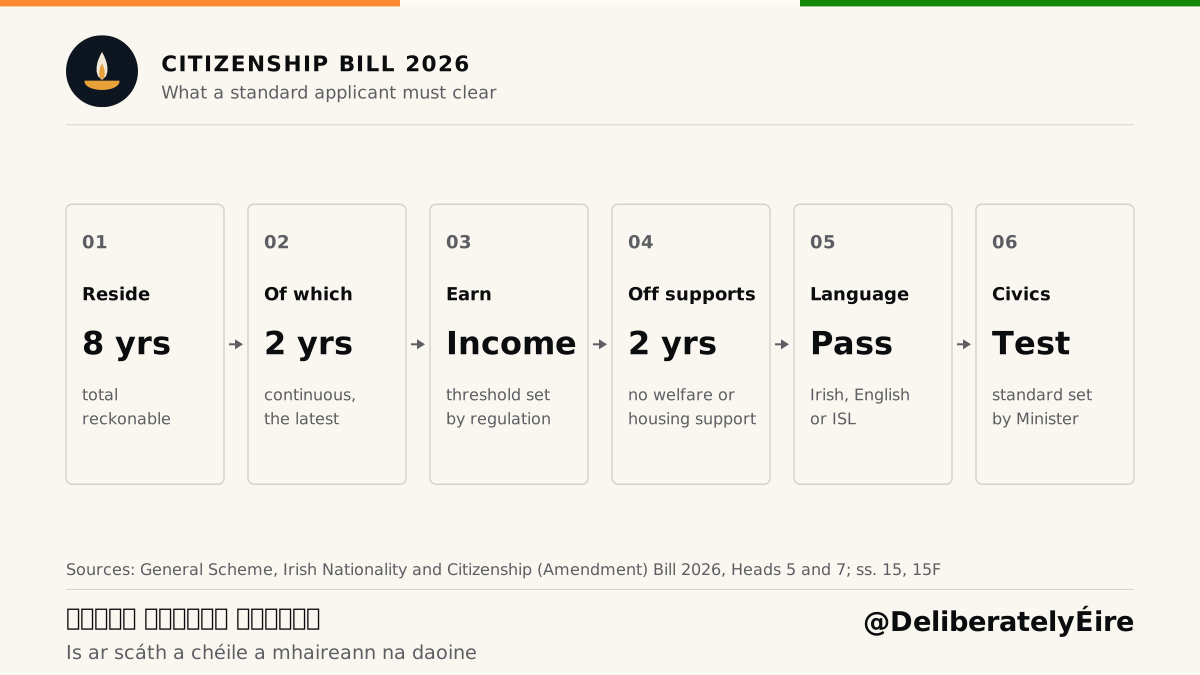
- Continuous residence immediately before application: 1 year → 2 years
- Total residence in the preceding window: 4 years out of 8 → 6 years out of 10
- The two limbs stack, so the minimum reckonable residence goes from 5 years to 8. Immigration Service Delivery calls today's rule "5 years of legal residency in the last 9 years", the "5 in 9" rule; the Scheme makes it 8 in 12.
Spouses/civil partners of Irish citizens (Section 15A):
- Length of the marriage or civil partnership: 3 years → 5 years (subheads 1 and 2, amending section 15A(1)(c)(i) and (ii))
- Continuous residence on the island of Ireland immediately before application: 1 year → 2 years (subhead 3, amending section 15A(1)(e))
- Total residence on the island of Ireland: 2 years within the preceding 4 → 3 years within the preceding 5 (subhead 4, replacing section 15A(1)(f))
- Stacked, that is 3 years of residence rising to 5.
The three-year figure in the current law is the length of the marriage, not a residence requirement — a distinction worth holding onto, because the two move by different amounts.
Children born in Ireland to non-nationals (Section 6B):
- Reckonable residence for citizenship-by-birth purposes aligned with the new naturalisation reckonable-residence rules (Section 16A). The change does not apply to a child born before commencement (new Section 6B(4A)).
Why it matters: The continuous-residence limb doubles to two years, and absences beyond what ISD allows break it. Together with the longer total, a standard applicant waits three additional years before becoming eligible.
2. Self-Sufficiency: A New Statutory Condition (Head 5, Section 15(1)(f) & Head 7, new Section 15F)
For the first time, the law would explicitly require that an applicant "has sufficient resources for himself or herself not to become an unreasonable burden on the State."
The Bill defines this through three objective tests (Section 15(3)):
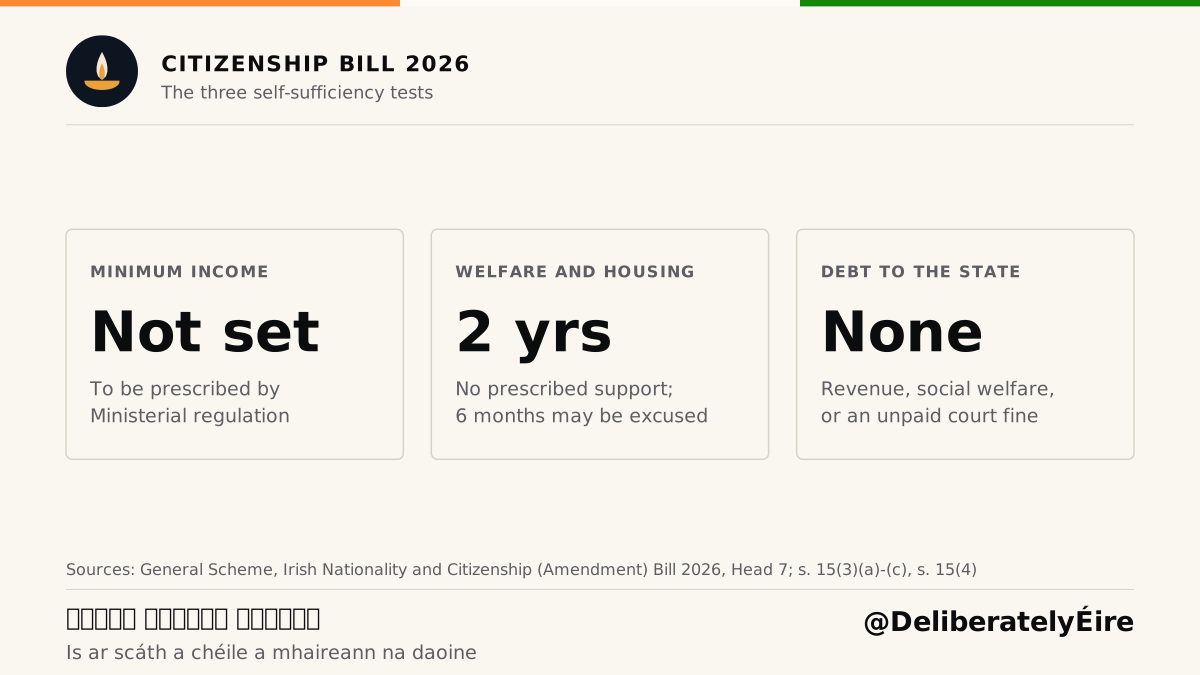
| Test | Detail |
|---|---|
| Minimum income | Applicant must earn at least a Minister-prescribed threshold (based on CSO earnings data, cost of living, etc.) |
| No prescribed welfare/housing | Not in receipt of prescribed social welfare payments or prescribed housing supports at time of application, nor for the 2 years prior (with a 6-month grace allowance at Minister's discretion) |
| No state debts | No outstanding debts to Revenue, Department of Social Protection, or court fines |
The Minister will set the exact income threshold and the lists of "prescribed" welfare payments and housing supports via regulations (new Section 15F); the welfare and housing lists need the consent of the Ministers for Social Protection and Housing. The test applies to standard applicants under Section 15; Head 6 does not add it for spouses of Irish citizens. The conditions must also hold while the application is pending (new Section 15(1)(j)).
Why it matters: This mirrors the self-sufficiency framework introduced in the International Protection Act 2026 for family reunification. It shifts the assessment from discretionary to rules-based — but the rules themselves will be set later by regulation.
3. Language and Civics Tests (Heads 5 & 6)
Two entirely new requirements, both applying to every naturalisation applicant under Sections 15 and 15A:
- Language proficiency — Irish, English, or Irish Sign Language, to a standard the Minister sets
- Civics knowledge — "Irish civics, society and politics", to a standard the Minister sets
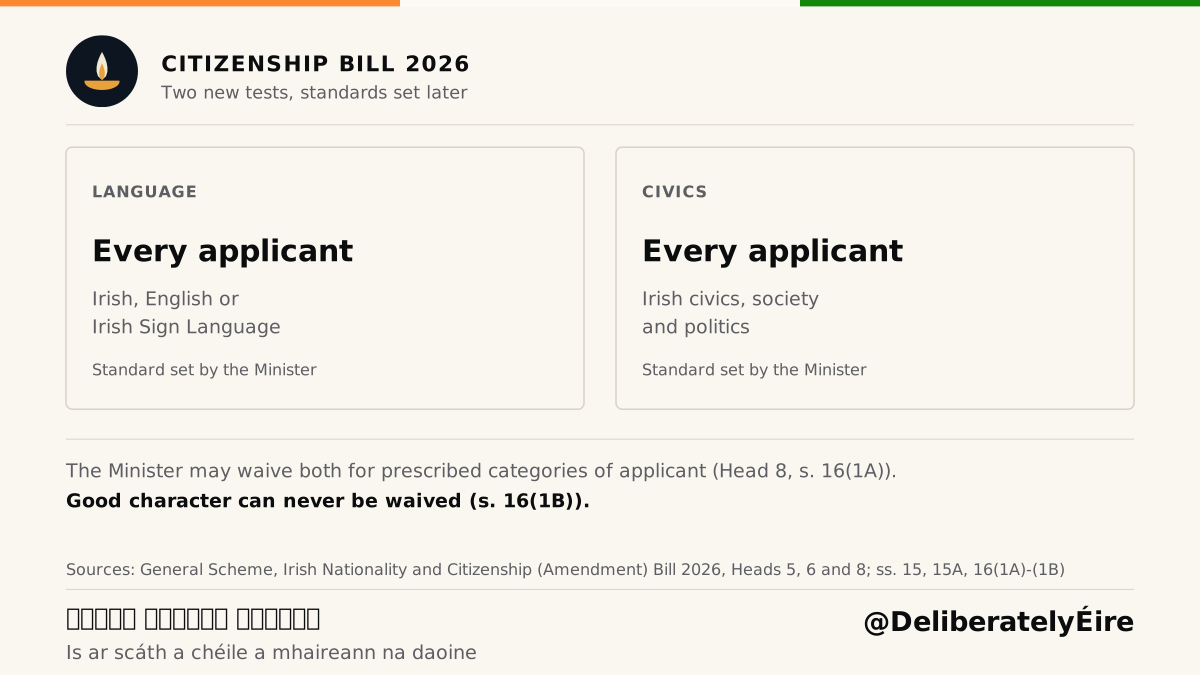
Waiver possible (Head 8, new Section 16(1A)): The Minister may waive language/civics requirements for "particular categories of applicants" via regulations — intended to protect vulnerable groups. But good character can never be waived (new Section 16(1B)).
Why it matters: Ireland joins most EU peers in requiring language/civics integration proofs. The waiver power is a safety valve, but its scope depends entirely on future regulations.
4. Cleaner Reckonable Residence: Temporary Permissions Don't Count (Head 9, Section 16A)
The Bill explicitly excludes from "reckonable residence" any time spent on temporary or inherently transitory permissions, including:
- Temporary Protection permissions under section 60(6) of the 2015 Act (the mass-influx route, e.g. Ukraine), and under section 237(8) of the International Protection Act 2026
- Permissions while awaiting EU treaty rights determinations (where subsequently refused)
- Permissions during reviews/appeals of refused EU treaty rights claims
- Periods where residence was based on fraud or abuse of rights, or claimed under the EU free movement rules by someone later found not entitled
- Any other temporary/limited permission the Minister prescribes
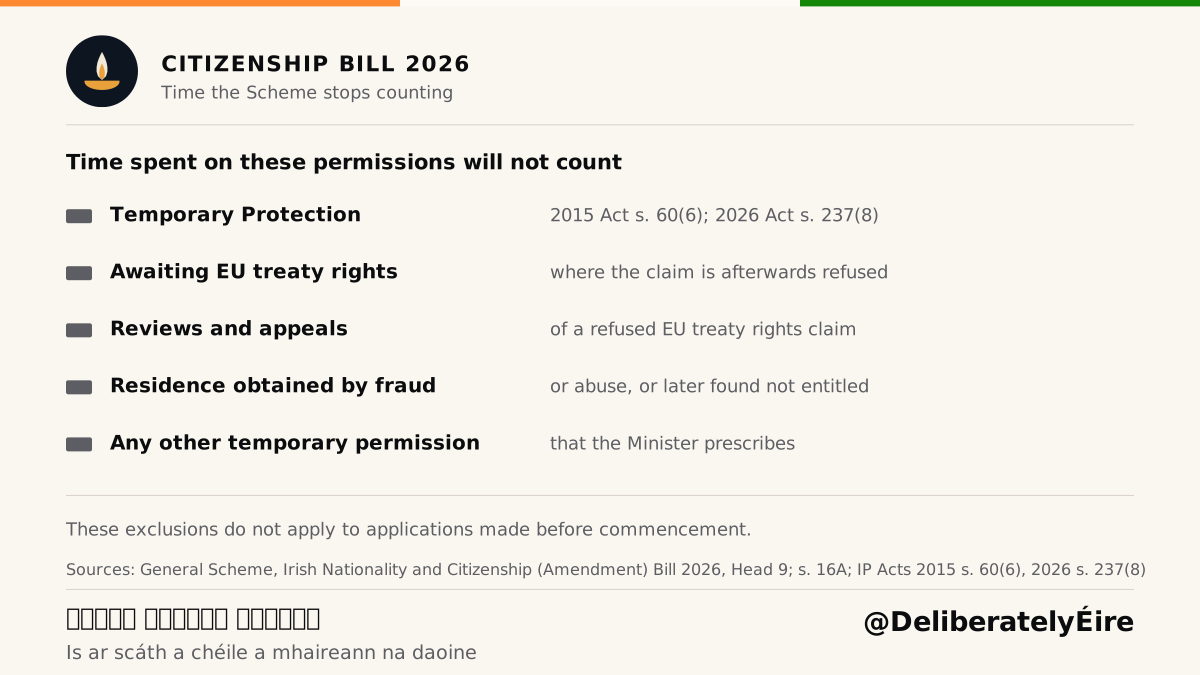
Transitional protection: These exclusions do not apply to applications submitted before commencement (Head 9, subhead 2, mirroring the 2004 Act transition). That saving covers Head 9 only; the Scheme has no equivalent for the longer residence period or the new tests.
Why it matters: This closes a long-debated gap. Time spent in Ireland on humanitarian or provisional grounds will no longer accrue towards citizenship eligibility.
5. Revocation: National Security Ground Added (Head 10, Section 19)
A new standalone ground for revoking a certificate of naturalisation:
"It is in the interests of public policy, public order or national security."
This sits alongside existing grounds (fraud, concealment, disloyalty, etc.). The Bill also removes a procedural requirement to consult the Chairperson of the Committee of Inquiry, creating what the Explanatory Note calls "an enduring regulatory framework."
Why it matters: Broad wording; rare in practice but expands Ministerial discretion significantly in a changed EU/international security environment.
6. Offences That Bar Naturalisation (Schedule 1)
A new Schedule lists specific offences that automatically preclude a grant of citizenship, whether committed before or during the application process. These include offences under:
- The Irish Nationality and Citizenship Act 1956 (section 29A)
- Immigration Acts (1999, 2004)
- International Protection Acts (2015, 2026)
- EU Free Movement Regulations (2015)
- EU Withdrawal Agreement Regulations (2020)
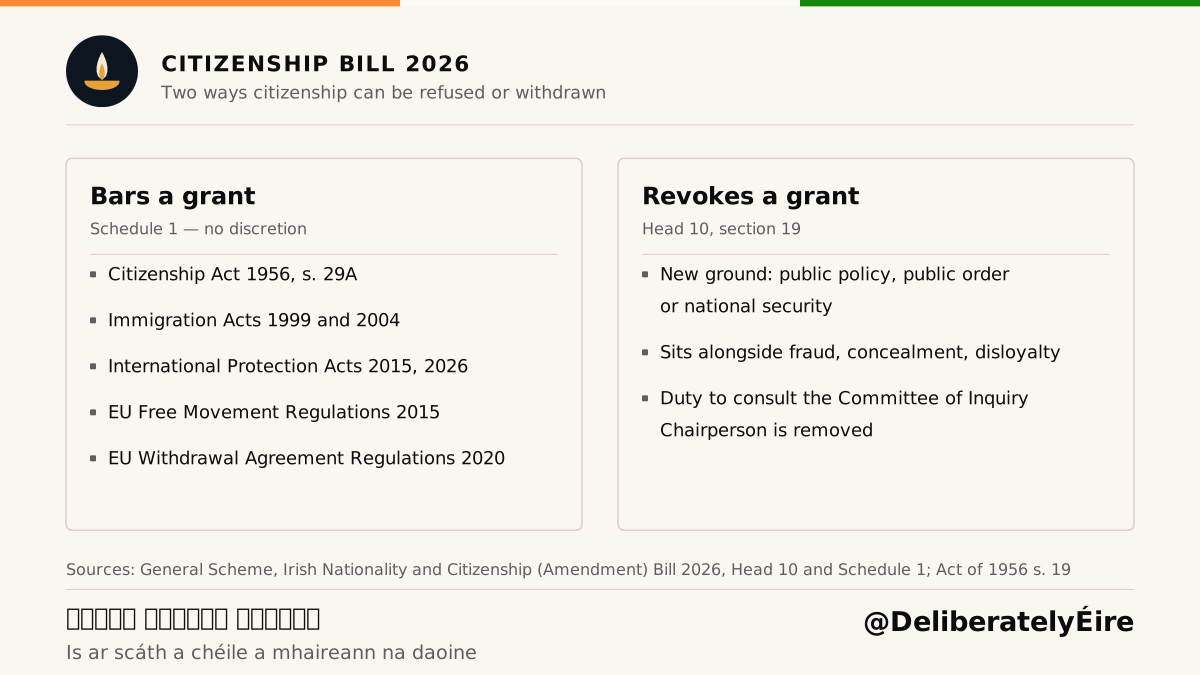
Why it matters: Codifies "good character" with a defined list of immigration-related offences. No discretion — if the offence is on the list, naturalisation is blocked.
What This Means in Practice
For Applicants Currently in the System
- Reckonable residence: Head 9's exclusions do not apply to an application made before commencement (Head 9, subhead 2).
- Everything else: The Scheme has no saving provision for the longer residence period, the self-sufficiency test or the language and civics tests. Whether they reach applications already lodged depends on the Bill's final text and the commencement orders.
For Future Applicants
| Profile | Additional Wait | New Hurdles |
|---|---|---|
| Worker on Stamp 1/4 | +3 years (5 → 8) | Income threshold, language, civics, welfare/housing lookback |
| Spouse of Irish citizen | +2 years residence (3 → 5); +2 years married before applying | Language, civics, offence bar; no self-sufficiency test |
| Temporary Protection beneficiary | Significant — Temporary Protection time no longer counts | All above + reckonable residence reset |
| Student / Stamp 2 | Student time already non-reckonable; no change to that | Must meet all new conditions post-graduation |
What Happens Next?
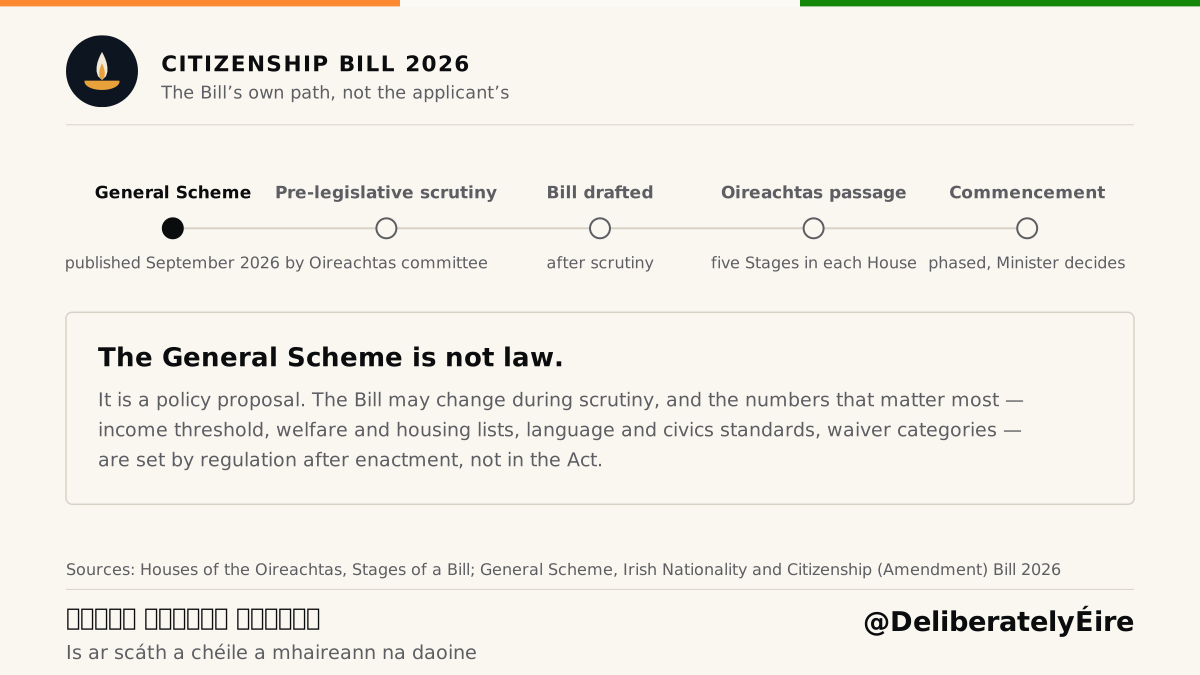
The General Scheme is not law. It is a detailed policy proposal. The Government approved priority drafting in September 2026, and the Scheme goes next to the Joint Committee on Justice for pre-legislative scrutiny; the Bill then needs five Stages in each House before commencement orders bring it into force. The actual Bill may change during scrutiny. The most consequential details — income threshold, welfare/housing lists, language/civics standards, waiver categories — will be set in regulations after enactment, not in the Act itself.
How to Engage
- Read the full General Scheme — gov.ie PDF
- Watch for Oireachtas Committee hearings — submissions from civil society, migrant groups, legal professionals will shape the final Bill.
- Track the regulations — the real impact lives in the Ministerial regulations (Section 15F), not the Act.
- If affected — consult an immigration solicitor before the law changes. Only Head 9's reckonable-residence changes are expressly saved for applications lodged before commencement.
Quick Reference: The 10 Heads
| Head | Section Amended/Inserted | Core Change |
|---|---|---|
| 1 | Long Title | Standard |
| 2 | Short Title & Commencement | Standard; phased commencement |
| 3 | Definitions | "Qualifying period", "sufficient resources", "minimum level of income" |
| 4 | Section 6B | Aligns birth-citizenship reckonable residence with new naturalisation rules |
| 5 | Section 15 | +3 yrs residency (5 → 8); self-sufficiency; language; civics; offence bar; ongoing conditions |
| 6 | Section 15A | +2 yrs residence and marriage for spouses; adds language, civics, offence bar |
| 7 | New Section 15F | Regulation-making for income, welfare, housing thresholds |
| 8 | Section 16 | Waiver for language/civics; good character never waivable |
| 9 | Section 16A | Temporary permissions excluded from reckonable residence |
| 10 | Section 19 | Revocation: adds national security / public policy ground |
| Sch 1 | — | List of offences barring citizenship |
This explainer is based on the General Scheme as published. It is not legal advice. For individual circumstances, consult a qualified immigration solicitor.
Deliberately Éire — making Irish public policy legible.
Want the next dispatch?
Leave your address and hear when new work on diplomatic records, constitutional milestones, and living diaspora research is published.